How Maintenance Plans Save You Money Over One-Off Cleanings
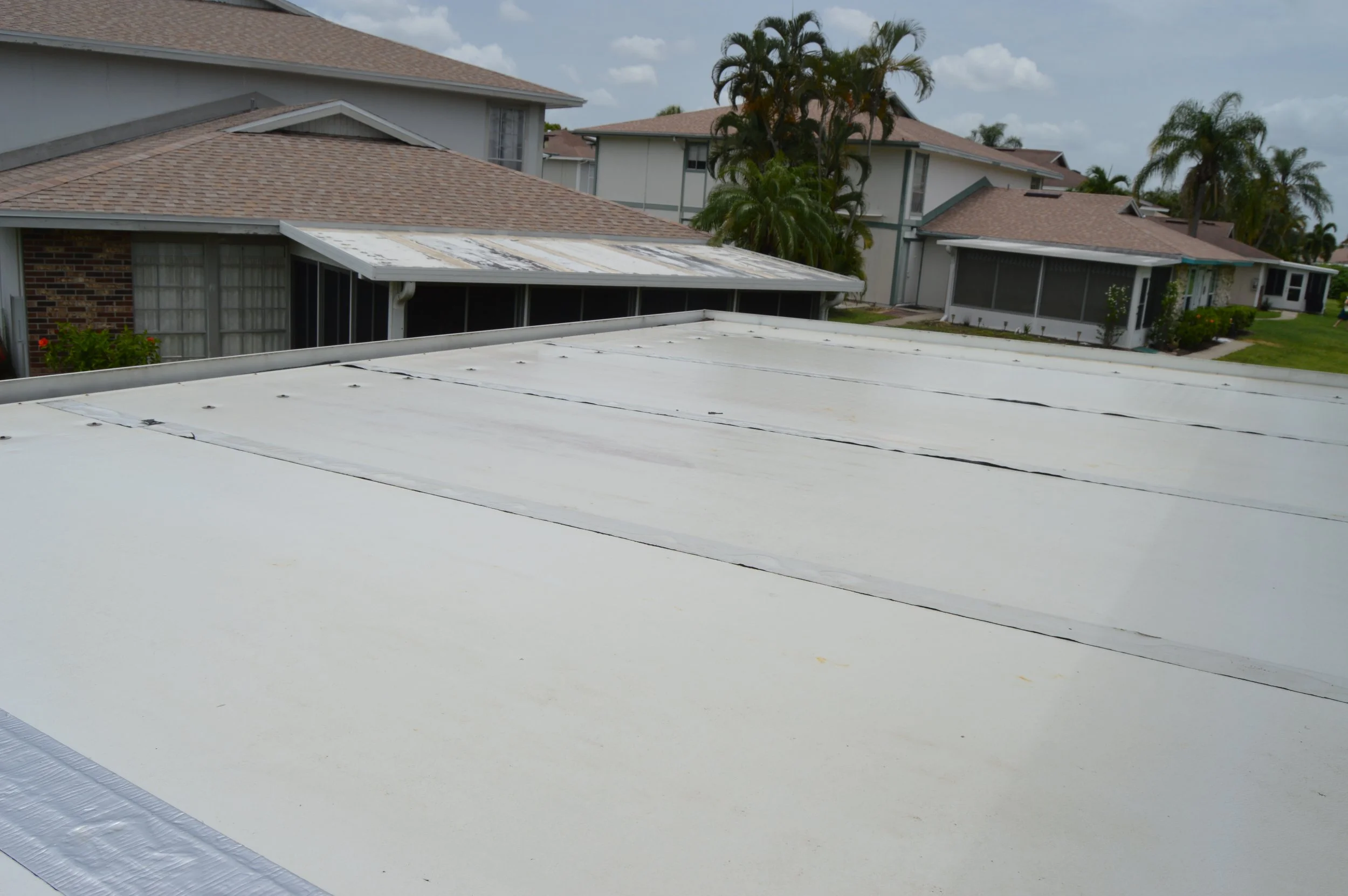
Freshly cleaned lanai roof
Wondering if a pressure washing maintenance plan is worth it? Here's how regular exterior cleaning in Southwest Florida costs less than waiting until your home looks bad.
If you live in Fort Myers, Cape Coral, or Naples, you already know Florida doesn't give your home a break. Humidity, summer rain, salt air, and year-round sunshine make the perfect home for algae, mildew, and mold. A house that looked fresh in spring can look tired by fall.
Most homeowners handle this the same way: they wait until the driveway is slick and green or the roof has dark streaks, then call for a one-time cleaning. It works, but it's usually the most expensive way to do it.
Here's why a maintenance plan costs less over time.
1. Heavy buildup costs more to remove
Cleaning a surface that's been let go takes more time, more product, and more labor. Algae that's had a year to settle into your driveway, pool cage, or stucco doesn't come off easily. Light, regular cleanings keep growth from taking hold, so each visit is faster and simpler.
Think of it like dental care. A regular cleaning is quick and affordable. Waiting until there's a problem is where the bills climb.
2. Regular cleaning protects what you've already paid for
Algae and mildew aren't just cosmetic. Left alone, they can:
Shorten roof life. Organic growth holds moisture against shingles and tile.
Stain and etch surfaces. Rust, mildew, and algae can leave marks that last on concrete, pavers, and stucco.
Make surfaces slippery. Slick driveways, walkways, and pool decks are a real safety concern.
Hurt your paint. Constant moisture and growth break down finishes faster.
Repainting, resurfacing, or replacing a roof costs far more than staying on top of cleaning. A maintenance plan is cheap insurance for your exterior.
3. Plan members save 10% on every visit
One-off cleanings are priced at the standard rate every time. After the one-time onboarding clean at the standard rate, plan members get 10% off the cost of each visit, and that discount applies every time we show up. You also get priority scheduling (and same-week service on The Flood), so you're not waiting behind one-time customers when a storm blows through or guests are on the way.
Over a year, those savings add up, and you avoid the expensive heavy-buildup cleanings that come from waiting too long between washes.
4. Your home stays consistently clean, not clean-then-dirty
With a one-time cleaning, your home looks great for a few weeks, then slowly slides back until you're frustrated enough to call again. On a plan, the cycle never gets that far. Your home always looks cared for, which matters if you're:
Hosting family, guests, or seasonal visitors
Planning to sell or refinance
Managing a rental or vacation property
Living in an HOA community with appearance standards
Just tired of looking at a dingy driveway
5. Scheduling is handled for you
Ask any homeowner how often they think about pressure washing, and the honest answer is "only when it looks bad." A plan takes that off your list. We keep the schedule, show up when we're supposed to, and you don't have to remember, get quotes, or find time to book.
Choosing the right plan
Every home is different, so we built maintenance plans around how often your surfaces actually need attention and can be customized to meet your homes needs.
The Drip: quarterly visits. A good fit if your home needs steady upkeep without constant visits. Each visit covers your driveway and walkway wash and an exterior screen wash on your pool enclosure, with priority scheduling. It works especially well for snowbirds and part-time residents, so your home isn't green and streaked when you get back.
The Current: every 2 months. Our most popular plan. It adds your patio, a full pool enclosure wash (interior and exterior screens plus the frame), and a full house exterior wash, along with priority scheduling. This is the right pace for most Southwest Florida homes, especially in rainy season, when algae and mildew move fast.
The Flood: monthly visits. The most complete level of care. Every visit covers all your hardscapes (driveway, walkway, patio, pool deck, and lanai), a full pool enclosure wash, and a full house exterior wash. You also get same-week priority scheduling and a free re-treat guarantee. It suits homeowners who want everything looking its best year-round, vacation rental owners, and anyone who hosts often.
Every plan starts with a one-time onboarding clean at our standard rate, so we begin from a clean slate and keep it that way.
Not sure which one fits? We'll look at your home, your surfaces, and how quickly things get dirty where you live, then recommend a plan. No pressure.
Ready to keep it clean?
Whether you're in Fort Myers, Cape Coral, or Naples, a maintenance plan is one of the simplest ways to protect your home and your budget. Pick a plan, save 10% on every visit, and stop thinking about it.
Washed Clean. Made New.
👉 Request a free quote or call/text 239-887-2759 to find the right plan for your home.
5 Signs Your Pool Enclosure Needs a Deep Clean
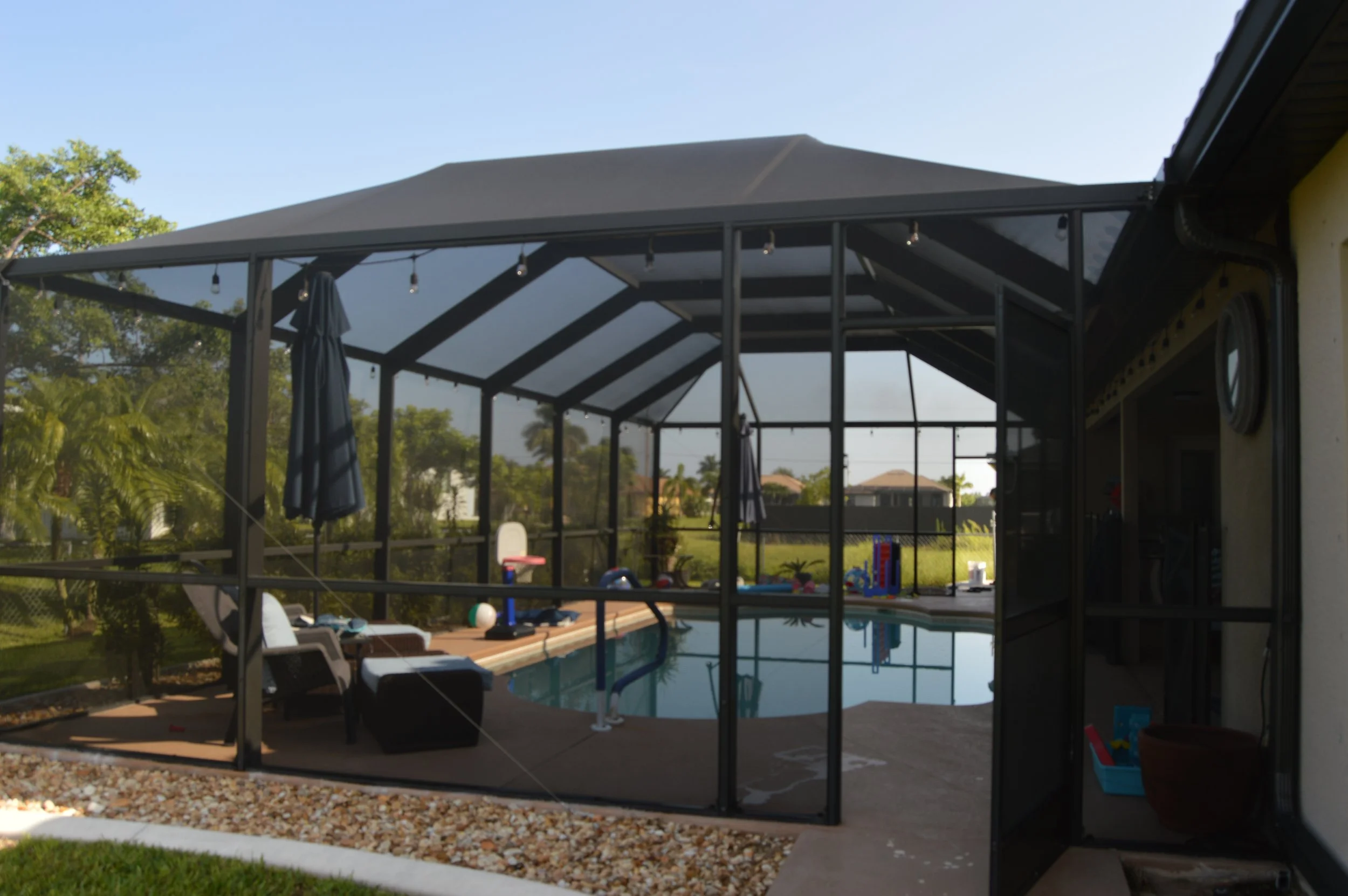
Southwest Florida's humidity, rain, and canal-side living make pool enclosures magnets for grime, often faster than homeowners expect. Here's how to tell when it's time to schedule a professional soft wash instead of reaching for the garden hose.
1. Black or Green Streaks on the Screen or Frame
Those dark streaks aren't dirt, they're algae and mold thriving in Florida's humidity. Left alone, they spread fast and can eventually stain the aluminum framing permanently, not just the screen mesh.
2. A Hazy or Dingy Pool Cage That “Used to Sparkle"
If your enclosure looked bright and clean when it was installed but now has a dull, gray film over the screens and frame, that's a buildup of airborne dirt, pollen, and organic growth. It blocks sunlight from reaching your pool and quietly drags down your home's curb appeal.
3. Visible Mildew or Mold on the Pool Deck Beneath the Enclosure
Shaded, humid conditions inside a pool cage are ideal for mold growth on the deck itself. If you're seeing dark spots or a slippery film on the concrete or pavers, it's a sign the whole enclosed area, not just the screens, needs attention.
4. Reduced Airflow or a “Stuffy" Feel Inside the Cage
Screens caked with dirt, pollen, and grime don't just look bad; they restrict airflow. If the space feels more closed-in and humid than it used to, buildup on the mesh is likely a factor.
5. It's Been Over a Year Since the Last Deep Clean
Even without obvious staining, pool enclosures accumulate salt spray, pollen, and organic debris year-round in SWFL. An annual (or more frequent, if you're near a canal) soft wash keeps small buildup from turning into set-in stains that are much harder and more expensive to remove.
Why Soft Washing (Not Pressure Washing) Is the Right Approach
Pool cage screens are delicate. High-pressure washing can tear the mesh or warp the frame. A proper soft wash uses low-pressure application with the right cleaning solution to lift algae, mold, and grime without damaging the screen or surrounding landscaping.
Noticing any of these signs?
Water is Wild Pressure Washing offers pool enclosure soft washing designed for Southwest Florida's climate, with low-impact cleaning methods for waterfront homes. Contact us today for your free quote!
Why Fort Myers Homes Are Especially Prone to Black Algae
It All Begins Here
A few local factors make Southwest Florida a hotspot for algae growth:
High humidity almost year-round
Frequent rain and afternoon storms, especially in summer
Warm temperatures that rarely dip low enough to slow algae growth
Shaded, north-facing rooflines common in many Fort Myers neighborhoods
If you live near Cape Coral, Estero, Lehigh Acres, or anywhere in Lee County, chances are your home is dealing with, or will soon deal with the same black streaks.
Signs Your Fort Myers Home Needs a Soft Wash
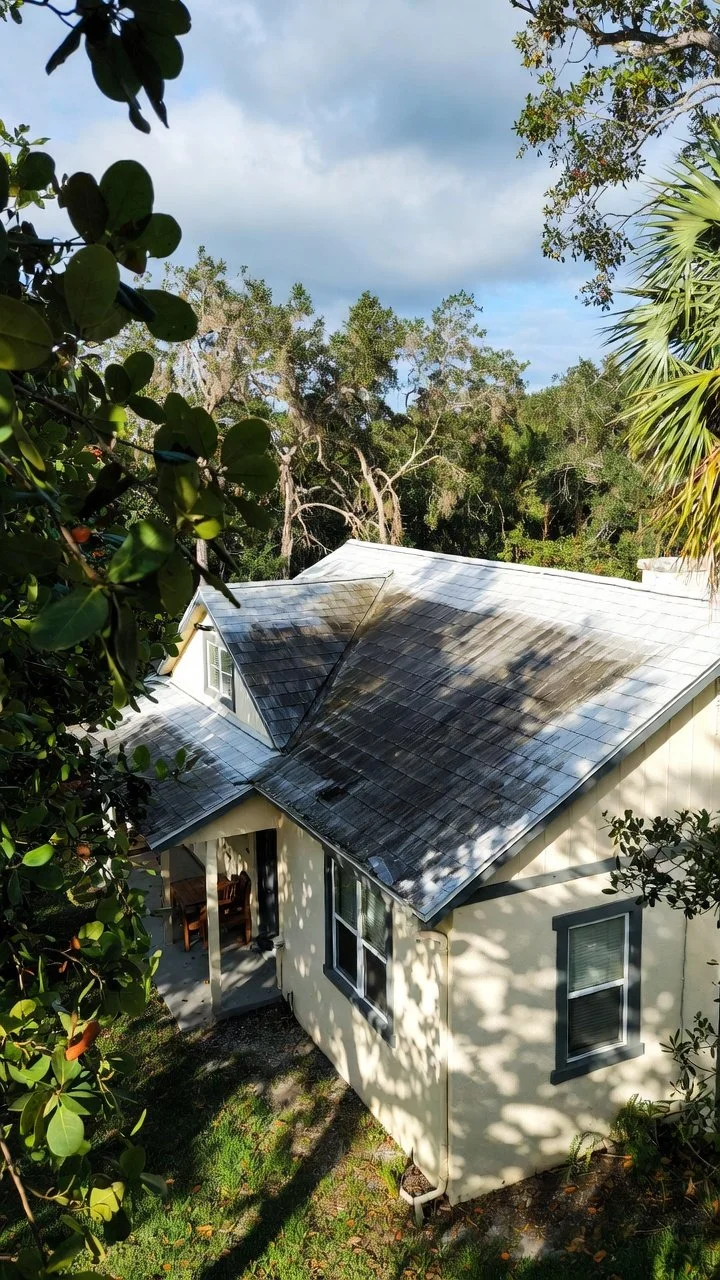
Dark streaks or splotches on roof shingles
Black or green stains creeping up stucco or siding near the roofline
Discoloration around gutters, soffits, or window trim
A generally "dingy" look compared to neighboring homes
The Bottom Line
Black algae isn't just a cosmetic nuisance, it's an organism actively breaking down your roof and siding materials in Florida's humid climate. Pressure washing might offer a quick visual fix, but it risks real damage and doesn't solve the underlying problem. Soft washing removes the algae at the source, protects your home's exterior, and keeps your Fort Myers property looking its best for longer.
Ready to Get Rid of Black Algae for Good?
If you're seeing black streaks on your roof or siding, don't wait for it to spread. Our team specializes in professional soft washing for Fort Myers homes — safe, effective, and built to last.
Contact us today for a free soft washing estimate and give your home the clean it deserves.
Why Soft Washing Works Better for Black Algae
It All Begins Here
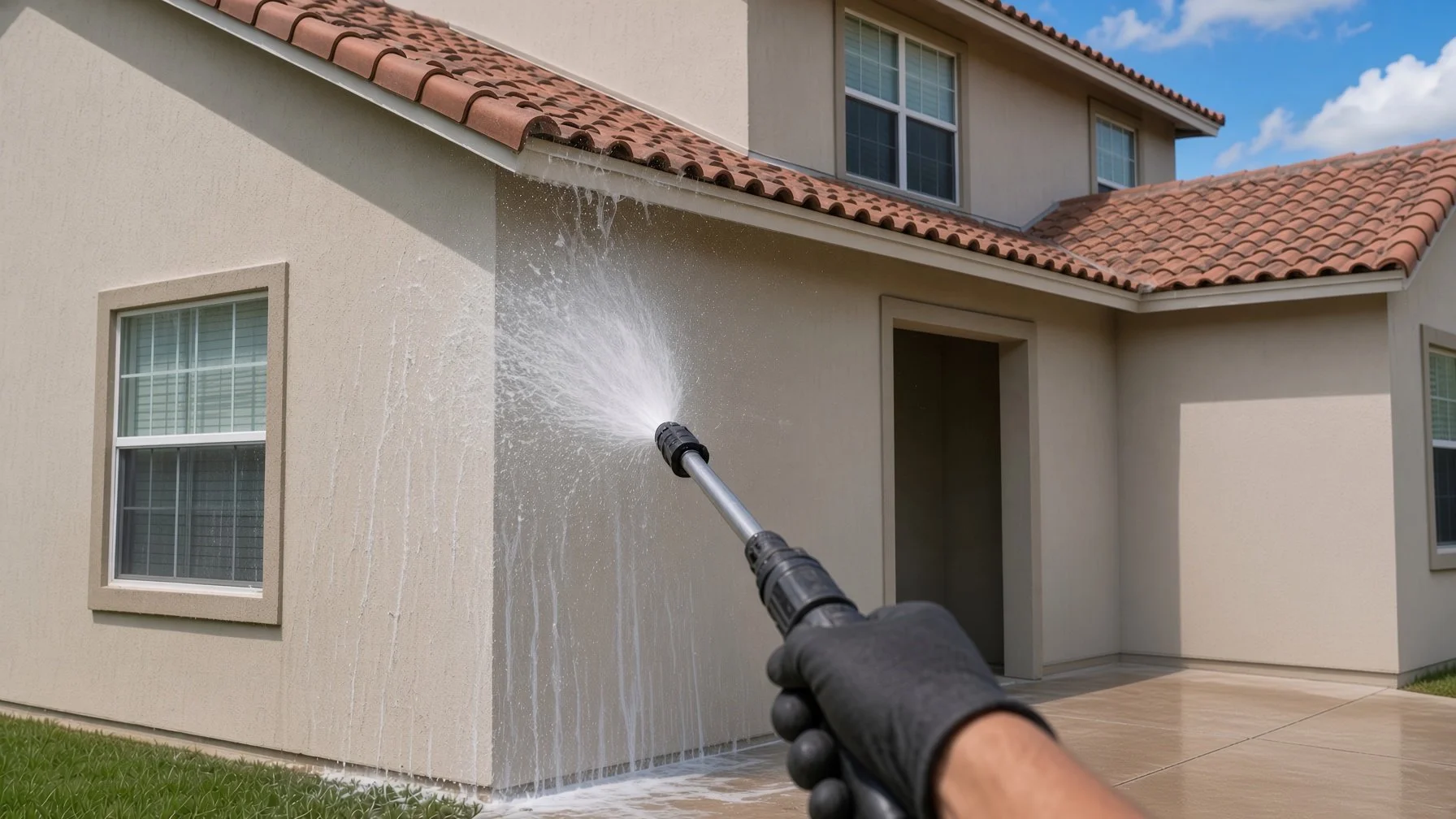
Soft washing uses low pressure combined with specialized, algae-killing cleaning solutions to treat the problem at its source instead of just blasting the surface.
Here's why it's the better choice for Southwest Florida homes:
1. It Kills the Algae, Not Just the Stain
Soft wash solutions penetrate and kill the algae organism and its spores, so the black streaks don't just disappear, they stay gone significantly longer than a pressure-only clean.
2. It's Safe for Roofs, Stucco, and Siding
Low-pressure application means no stripped shingles, no cracked stucco, and no risk of forcing water where it shouldn't go. A huge deal in a hurricane-prone climate where exterior integrity matters.
3. It's Better for Landscaping
Professional soft washing uses biodegradable, plant-safe solutions and proper rinsing techniques to protect the Florida landscaping you've invested in.
4. It Lasts Longer
Because soft washing addresses the algae at the root, most Southwest Florida homes only need a soft wash treatment once every 12–24 months, compared to more frequent pressure washing touch-ups that only treat symptoms.
5. It Protects Your Investment
Your roof and exterior are two of the most expensive components of your home. Soft washing extends their lifespan instead of accelerating wear, which means real savings over time.
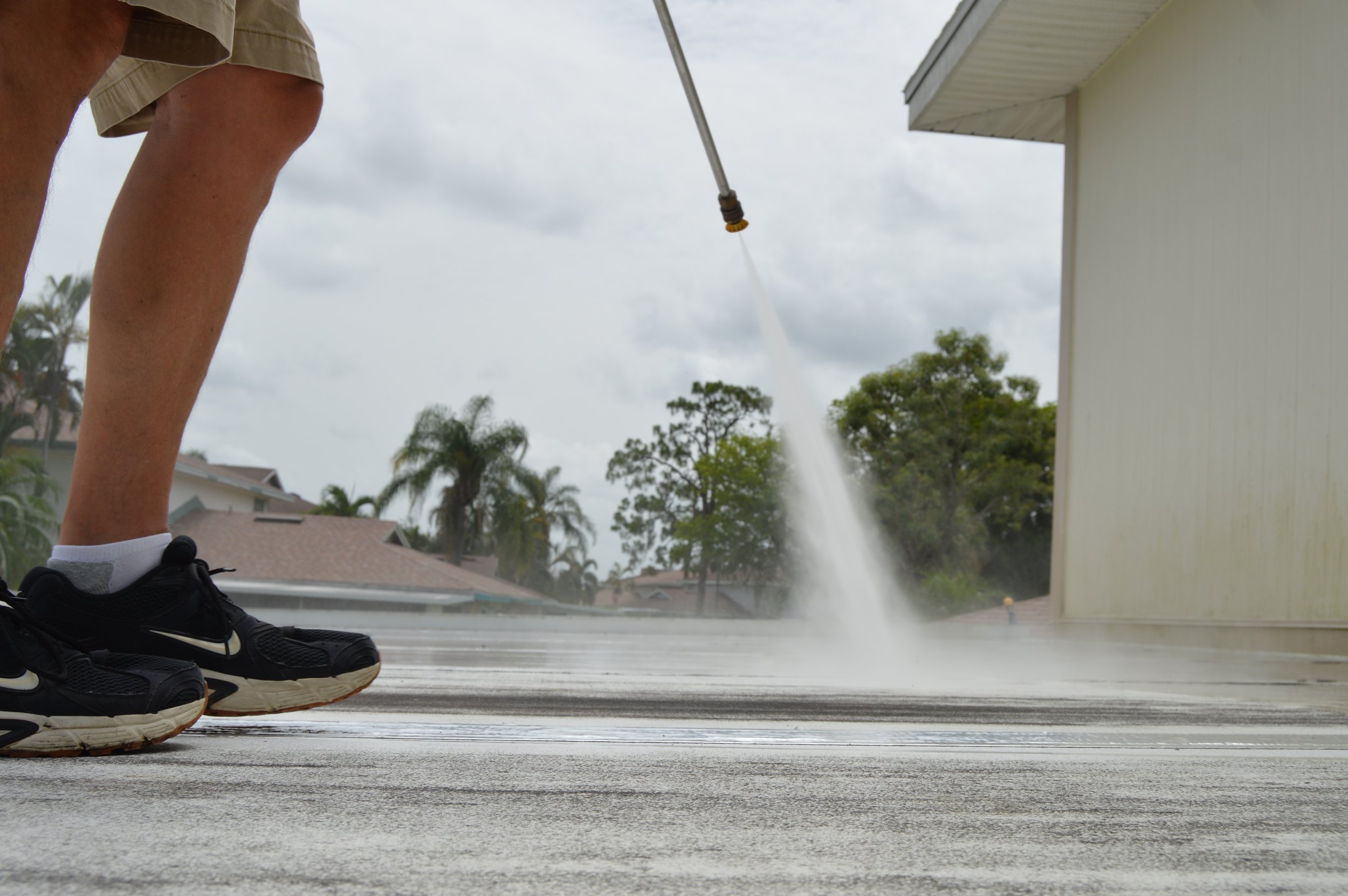
Why High Pressure Washing can be the Wrong Tool for the Job
It All Begins Here
It's tempting to think "just blast it off", but high-pressure washing on roofs, stucco, or painted siding can do serious damage:
Granule loss on shingles, which shortens your roof's lifespan and can void manufacturer warranties
Etched or gouged stucco and siding, especially on older Florida homes
Forced water intrusion behind siding, soffits, and window trim, leading to hidden mold and rot
Surface-only results — pressure washing knocks off visible algae but leaves the root structure behind, so it grows back fast
For delicate or granular surfaces, pressure washing is often a short-term fix that creates long-term problems.
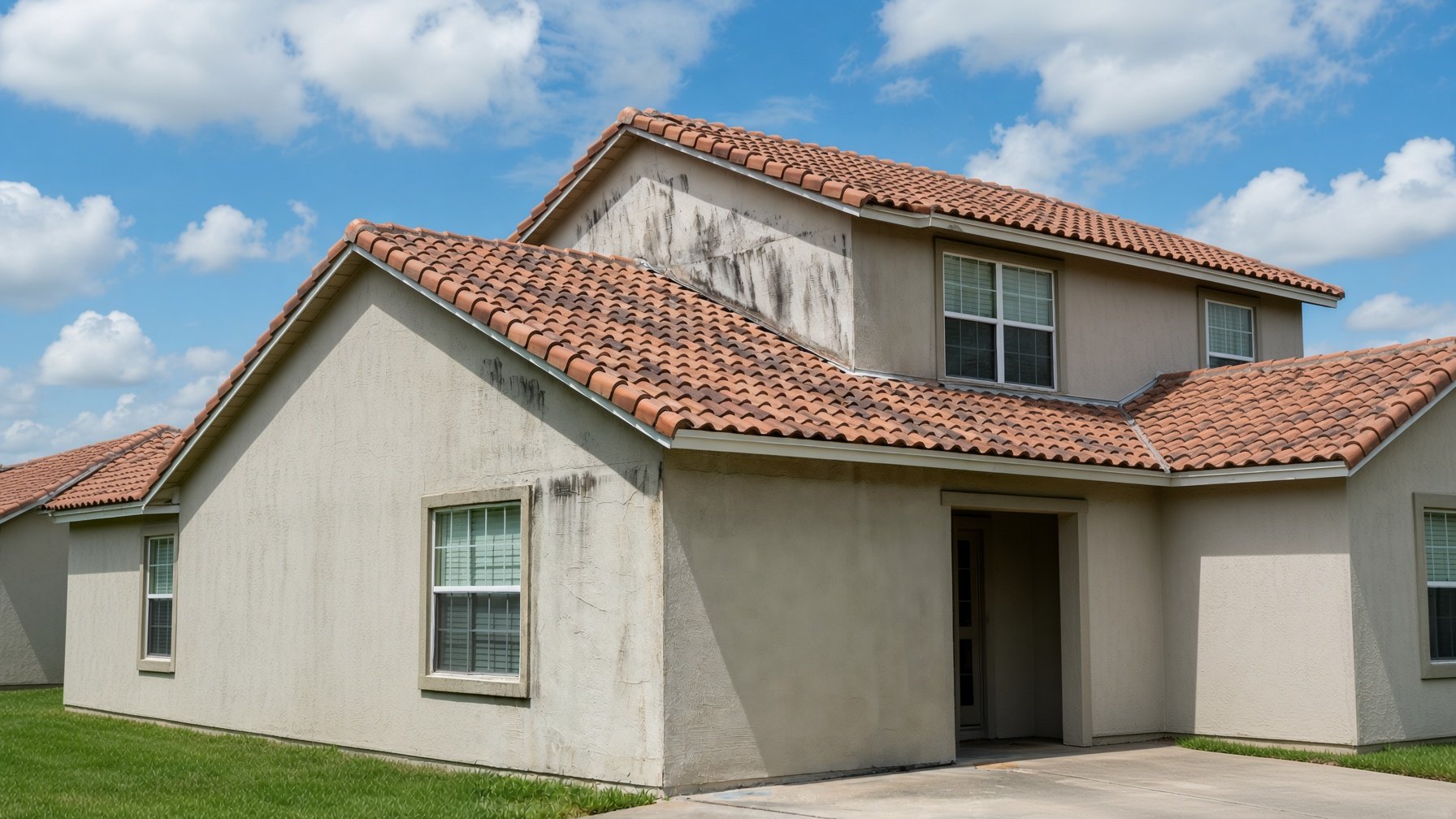
Why Soft Washing is the Best Way to Remove Black Algae from Your Fort Myers Home
It All Begins Here
Black streaks on your Fort Myers roof or siding? Learn why soft washing, not pressure washing, is the safest, most effective way to remove black algae (Gloeocapsa magma) and protect your home's exterior.
If you've noticed dark streaks creeping across your roof shingles or ugly black stains crawling up your stucco and siding, you're not alone. Homeowners across Fort Myers, Cape Coral, and the rest of Southwest Florida battle this problem year-round. That black grime isn't just dirt, it's algae, and Florida's heat and humidity make it thrive.
The good news? There's a safe, effective solution: soft washing. In this post, we'll explain what causes black algae, why pressure washing can actually make the problem worse, and why soft washing is the smarter choice for Fort Myers homes.
What Is That Black Stuff, Anyway?
Those black streaks are most commonly caused by a bacteria called Gloeocapsa magma. Despite the name, it behaves like algae — feeding on the limestone filler in asphalt shingles and thriving in warm, humid, shaded environments. Sound familiar? That's basically a description of Fort Myers weather nine months out of the year.
Black algae doesn't just look bad. Left untreated, it can:
Trap moisture against roofing materials and siding, accelerating wear
Spread rapidly to neighboring homes via airborne spores
Reduce curb appeal and hurt resale value
Damage stucco and paint over time as it eats into porous surfaces